
Annapurna Bhandar Scheme 2026:
₹3,000 Monthly DBT Official Guide
Empowering over 2.1 Crore women across West Bengal with guaranteed monthly financial support. Verify your eligibility, check real-time application status, view 2026 payment calendar, and access Duare Sarkar camp guidelines.
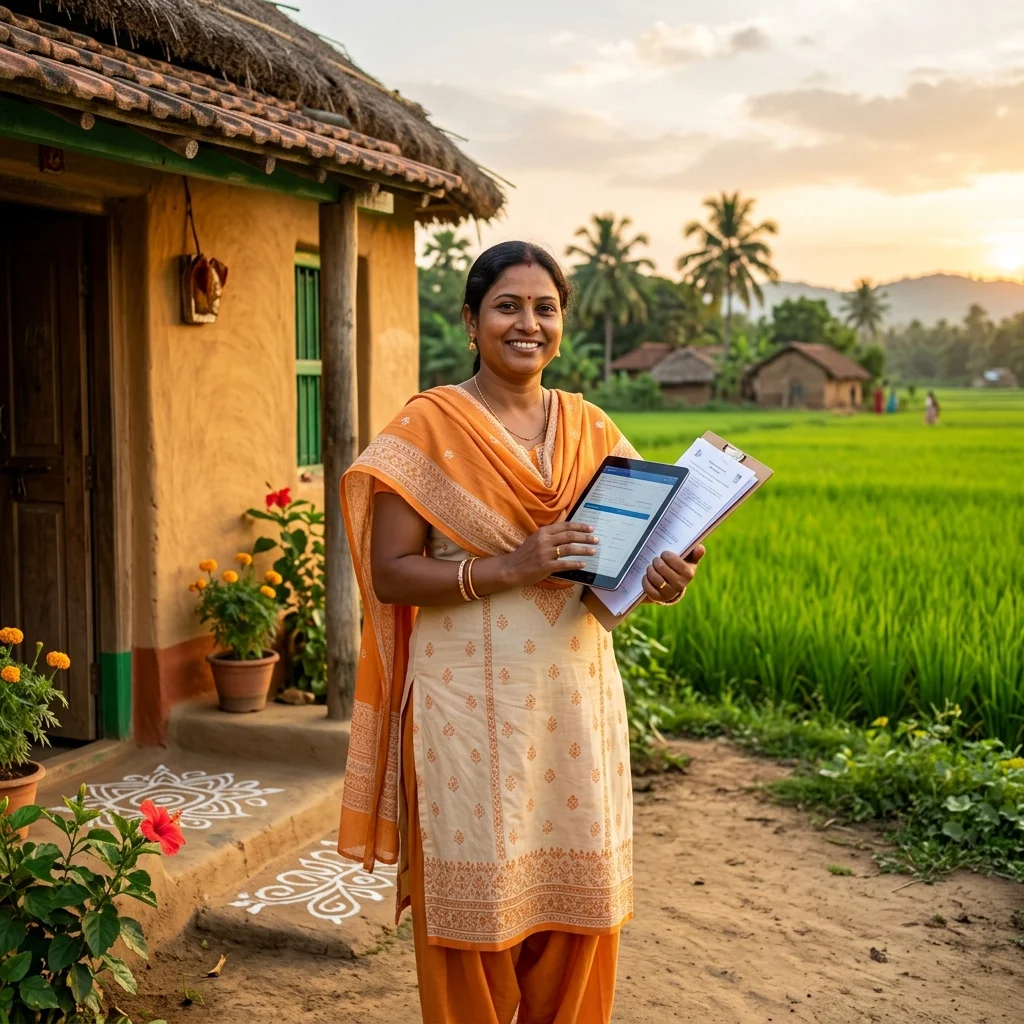
Quick Action Gateways & Form Downloads
Official links to departments, application forms in Bengali/English, and UIDAI seeding verification.
Apply Online Guide
Step-by-step submission instructions for Duare Sarkar camps and BDO counters.
Track Status & DBT
Verify if your application is approved and Aadhaar is mapped with bank NPCI.
Documents Checklist
View the 6 mandatory documents and self-attestation photocopy requirements.
Annapurna vs Lakshmir
Understand the ₹1,000 to ₹3,000 upgrade path and automatic migration rules.
📥 Download Official 2026 Application Form PDF (Language Copies)
Print the standard government format before attending Duare Sarkar to save queue time.
Annapurna Bhandar Eligibility Calculator 2026
Answer 4 quick questions to check if you qualify for the ₹3,000 monthly bank transfer.
Annapurna Bhandar Application & Payment Status Tracker
Enter your 12-digit Aadhaar Number or 16-digit Application ID (AB-WB-...) to simulate and verify your DBT disbursement stage.
Annapurna Bhandar 2026: Mandatory Documents Checklist
Tick each document to check if you have all required papers ready before visiting the Duare Sarkar camp.
Annapurna Bhandar vs. Lakshmir Bhandar: Key Differences
Detailed comparison matrix explaining payout increases, eligibility criteria, and automatic transition rules.
| Feature / Parameter | Lakshmir Bhandar (Existing) | Annapurna Bhandar (2026 Launch) |
|---|---|---|
| Monthly Payout (General / OBC) | ₹1,000 per month | ₹3,000 per month (3x Increase) |
| Monthly Payout (SC / ST) | ₹1,200 per month | ₹3,000 per month (Universal ₹3K) |
| Annual Benefit Total | ₹12,000 to ₹14,400 per year | ₹36,000 per year |
| Eligible Age Bracket | 25 to 60 Years | 21 to 60 Years (Expanded Youth Window) |
| Registry System | Standard Swasthya Sathi DB | Unified WB Social Registry + Aadhaar DBT |
| Migration / Transition Process | Active recipients continue receiving payouts | Automatic upgrade upon Social Registry Aadhaar e-KYC validation |
| Disbursement Channel | Direct Benefit Transfer (DBT) | Aadhaar-Enabled Payment System (AePS) / Direct Bank Transfer |
District-Wise Duare Sarkar & Nodal Helpline Directory
Locate your local District Magistrate (DM) and Block Development Office (BDO) camp schedule.
Kolkata
PresidencyHQ: Kolkata Municipal Corporation
North 24 Parganas
PresidencyHQ: Barasat
South 24 Parganas
PresidencyHQ: Alipore
Howrah
PresidencyHQ: Howrah Sadar
Hooghly
BurdwanHQ: Chinsurah
Nadia
PresidencyHQ: Krishnanagar
Murshidabad
MaldaHQ: Baharampur
Purba Bardhaman
BurdwanHQ: Bardhaman
Paschim Bardhaman
BurdwanHQ: Asansol
Birbhum
BurdwanHQ: Suri
Bankura
MedinipurHQ: Bankura
Purulia
MedinipurHQ: Purulia
Purba Medinipur
MedinipurHQ: Tamluk
Paschim Medinipur
MedinipurHQ: Midnapore
Jhargram
MedinipurHQ: Jhargram
Malda
MaldaHQ: English Bazar
Uttar Dinajpur
MaldaHQ: Raiganj
Dakshin Dinajpur
MaldaHQ: Balurghat
Jalpaiguri
JalpaiguriHQ: Jalpaiguri
Alipurduar
JalpaiguriHQ: Alipurduar
Cooch Behar
JalpaiguriHQ: Cooch Behar
Darjeeling
JalpaiguriHQ: Darjeeling
Kalimpong
JalpaiguriHQ: Kalimpong
Comprehensive Guide to Annapurna Bhandar Scheme 2026 (অন্নপূর্ণা ভান্ডার যোজনা)
The Annapurna Bhandar Yojna (অন্নপূর্ণা ভাণ্ডার প্রকল্প / अन्नपूर्णा भंडार योजना) represents an evolutionary transformation in West Bengal’s social safety net infrastructure. Recognizing the sharp increase in domestic household expenditures and basic food inflation, the Government of West Bengal has consolidated fragmented social assistance schemes into an enhanced, universal direct benefit transfer: ₹3,000 deposited every single month (₹36,000 annually) directly into the Aadhaar-linked single savings accounts of adult female heads of families.
Administered jointly by the Department of Women & Child Development and Social Welfare and the Department of Finance, this flagship initiative operates with a dedicated state budgetary allocation exceeding ₹25,000 Crores. Over 2.1 Crore women across rural gram panchayats and urban municipal wards benefit from this universal safety net, eliminating intermediaries and guaranteeing direct financial sovereignty.
🏛️ Core Architectural Pillars of Annapurna Bhandar 2026
100% Zero-Leakage DBT
Every rupee is transferred electronically via RBI’s NACH and PFMS gateways directly into the beneficiary's bank account, completely eliminating commission agents, middlemen, and cash leakages.
Matri Shakti Primacy
The scheme mandates that the primary registered applicant must be the adult female head of household as recorded in the Swasthya Sathi family registry, fostering financial decision-making power at home.
Duare Sarkar Delivery
Free paper application forms and offline submission counters are stationed across all 3,342 Gram Panchayats and 125 Municipalities during official Duare Sarkar public outreach camp phases.
Unified Social Registry
Application verification is cross-referenced dynamically against UIDAI biometric servers, state ration card databases, land records, and Treasury IFMS rosters to prevent ghost profiles.
₹3,000 Universal Payout
A flat ₹3,000 monthly disbursement replaces legacy multi-tier payouts (₹1,000/₹1,200), ensuring uniform social equality across General, OBC, SC, and ST female citizens.
Seamless LB Migration
Existing active Lakshmir Bhandar beneficiaries undergo automated system upgrade without submitting repetitive physical documentation, provided their bank accounts have active NPCI seeding.
Real-time SMS Tracking
Beneficiaries receive real-time push SMS alerts at each stage: Form Receipt, Block Verification, District Approval, Treasury Scroll Generation, and Bank Account Credit confirmation.
Grievance Redressal
Dedicated grievance desks at BDO and Municipal Borough offices, coupled with the State Toll-Free 1800-345-5678 Helpline, ensure rapid resolution of payment holds and IFSC discrepancies.
📊 Visual Architecture: Annapurna Bhandar Scheme Benefits Breakdown
Official Graphic Overview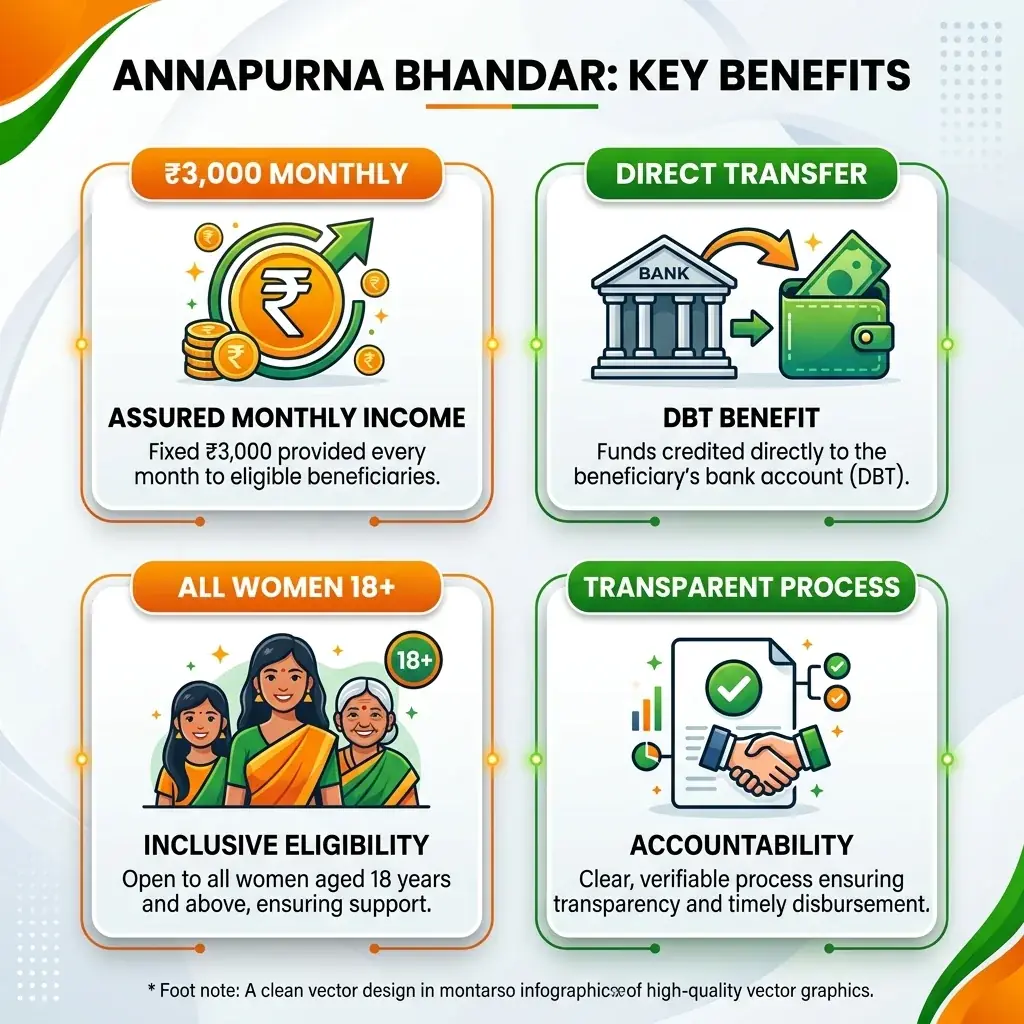
🌟 Why the Annapurna Bhandar Scheme Matters for West Bengal's Households
The Annapurna Bhandar initiative goes far beyond routine social assistance. By establishing an unconditional, guaranteed floor of disposable liquidity in the hands of women, the policy delivers systemic transformation across rural and urban micro-economies:
💳 Direct Domestic Budget Control
Historically, female family members in rural agrarian communities lacked dedicated cash reserves, forcing them to seek permission for minor daily expenditures. A predictable monthly payout of ₹3,000 gives women independent purchasing power for kitchen provisions, healthcare medicines, and child needs.
⛓️ Breaking Seasonal Debt Traps
Agrarian and marginal fisher families face severe cash crunches during non-harvest seasons and monsoon fishing bans. Guaranteed monthly bank deposits protect households from borrowing small sums from exploitative local moneylenders at 36% to 60% annualized interest rates.
🛒 Rural Village Market Multiplier
Direct benefit cash disbursed to female heads of families does not sit dormant; empirical economic studies show that over 90% of DBT cash is spent locally at weekly village haats, grocery stores, and rural pharmacies, stimulating local retail jobs and agricultural trade cycles.
🌱 Micro-Savings & Self-Help Group (SHG) Growth
With a guaranteed monthly inflow, millions of rural women participate in Ananda Dhara (WBSRLM) Self-Help Groups, contributing ₹200 to ₹500 monthly into group corpus funds. This unlocks low-interest bank credit for small livestock, tailoring, and poultry micro-enterprises.
📚 Child Nutrition & School Retention
Consistent financial liquidity directly translates to improved dietary diversity (protein-rich pulses, eggs, and dairy) for young children. Furthermore, it prevents seasonal school dropouts by ensuring parents can cover uniforms, school stationery, and transportation costs easily.
👵 Universal Protection for Widows & Senior Women
Elderly female family members and widows who lack familial property inheritances often face acute neglect. The Annapurna Bhandar entitlement restores their human dignity, guaranteeing that they can independently afford personal prescription medicines and basic hygiene needs.
🏛️ 4-Tier Administrative Governance & Verification Hierarchy
To maintain zero errors and prevent fraudulent duplicate entries across 2.1 Crore active applicants, West Bengal utilizes an automated, hierarchical 4-tier governance structure:
| Administrative Tier | Responsible Authorities | Core Operational Duties | SLA Timeline |
|---|---|---|---|
| Tier 1: State Apex | WCD Department & Finance Directorate (Nabanna) | State budgetary release, RBI electronic clearing sanction, PFMS protocol management, server security audits. | 1st–5th of month |
| Tier 2: District Level | District Magistrate (DM) & ADM (Social Welfare) | District treasury scroll approval, cross-block audit checks, district-wide camp scheduling, bank nodal officer coordination. | Within 7 days |
| Tier 3: Block / Sub-Division | Block Development Officer (BDO) & SDO Welfare Cells | Primary digital data entry, Aadhaar-Ration cross-verification, IFSC code rectification, duplicate de-duplication sweeps. | Within 14 days |
| Tier 4: Grassroots Intake | Gram Panchayat Pradhan & Municipal Ward Counters | Physical form distribution, photocopy receipt, field inquiry verification, issuing 16-digit stamped acknowledgment slips. | Real-time / Same day |
🗺️ 23 Administrative Districts Coverage & Regional Helpdesk Grid
The Annapurna Bhandar Scheme 2026 is universally active across all 23 districts of West Bengal grouped into 5 administrative divisions. Each administrative zone maintains specialized desks tailored to local demographics:
🏔️ Jalpaiguri Division (North Bengal)
Districts: Darjeeling, Kalimpong, Jalpaiguri, Alipurduar, Cooch Behar.
Specialized desks at Tea Garden labor welfare centers, tribal development cells, and Duare Sarkar camps along hill subdivisions.
🌾 Malda Division (Northern Plains)
Districts: Malda, Uttar Dinajpur, Dakshin Dinajpur, Murshidabad.
Special support counters for bidi workers, silk weavers, and cross-border riverine Char island populations with mobile internet vans.
🏭 Burdwan Division (Industrial Belt)
Districts: Purba Bardhaman, Paschim Bardhaman, Birbhum, Hooghly.
Integrated municipal counters across Asansol, Durgapur, and Bardhaman for colliery laborers and agricultural sharecropper households.
🌲 Medinipur Division (Jungle Mahal)
Districts: Paschim Medinipur, Purba Medinipur, Jhargram, Purulia, Bankura.
Panchayat helpdesks focused on ST caste certificate verification, forest dwellers, and coastal fishing communities along Digha/Contai.
🌊 Presidency Division & Sundarbans
Districts: North 24 Parganas, South 24 Parganas, Howrah, Nadia.
Boat-mounted biometric verification desks across remote Sundarbans blocks (Gosaba, Basanti, Sandeshkhali, Sagar Island, Patharpratima).
🏙️ Kolkata Metropolitan Cell
Coverage: Kolkata Municipal Corporation (All 144 Wards & 16 Boroughs).
Borough social welfare desks processing automated migrations for urban slum residents, single women, and senior citizens without smartphones.
🚀 4 Simple Steps to Register and Receive ₹3,000 Monthly
Step-by-Step Visual Walkthrough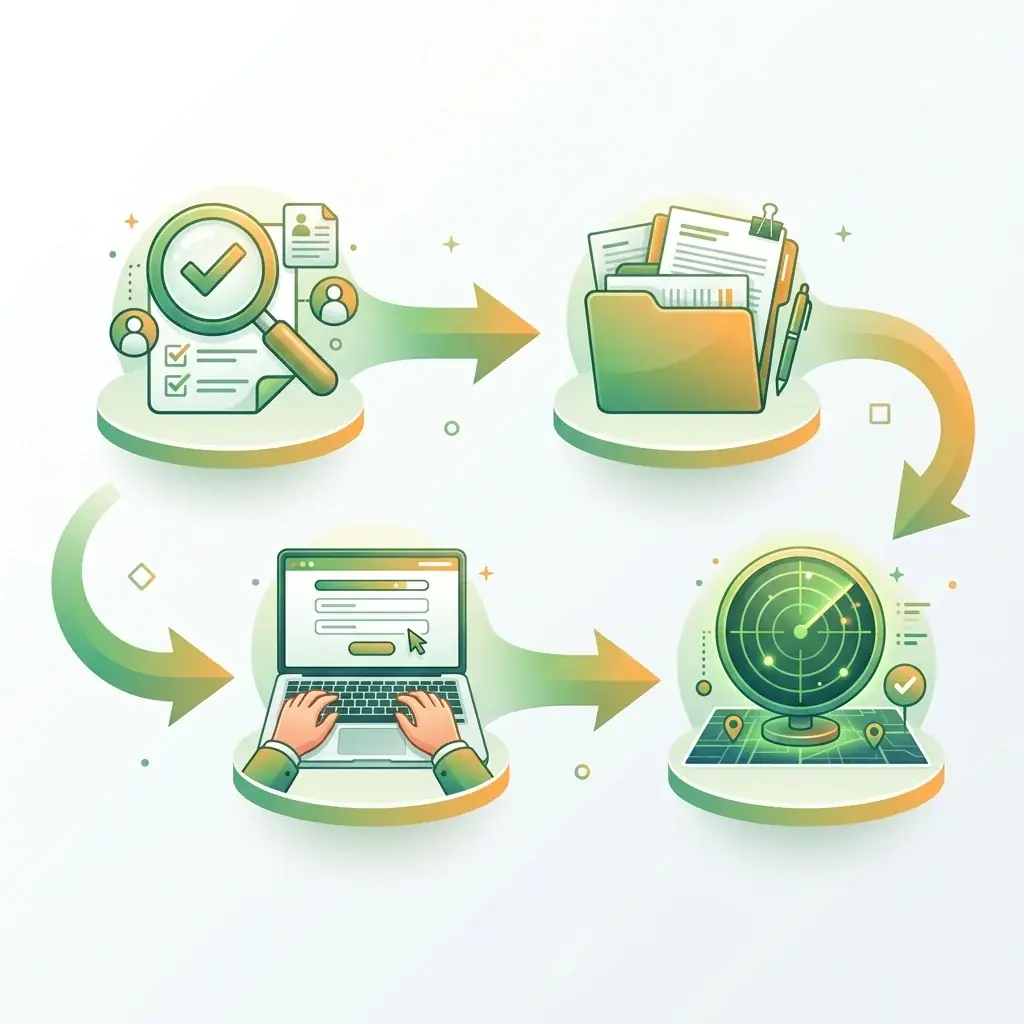
🔒 System Architecture, Aadhaar-NPCI APBS & Data Security
The Annapurna Bhandar technical pipeline operates on enterprise-grade government banking protocols to guarantee that public funds reach only genuine beneficiaries with zero fraud:
UIDAI Live Biometrics
Real-time API queries cross-check applicant 12-digit Aadhaar credentials against UIDAI servers, verifying demographic identity and matching OTP credentials securely.
NPCI Aadhaar Mapper
Disbursements do not rely on static IFSC codes alone; payments are routed via the Aadhaar Payment Bridge System (APBS), sending money to the latest active seeded bank account.
Cross-Registry Deduplication
Automated database queries run against State Government payroll (HRMS), Treasury pension registers, and Swasthya Sathi files to weed out ineligible duplicate claims instantly.
256-Bit SSL Transit Encryption
Every digital query between citizen devices, block development servers, and the state data center is encrypted with TLS 1.3 to protect citizen personal identity records.
✨ 10 Golden Rules for 100% Successful Grant Disbursement
Avoid 99% Rejections & Bank HoldsOver 80% of application rejections and disbursement failures occur due to minor, preventable documentation mistakes. Follow these 10 golden guidelines before attending Duare Sarkar:
Single Bank Account Only
Never provide a joint account with your husband or relatives. The state PFMS system will automatically reject joint accounts.
Aadhaar-NPCI Seeding Mandate
Visit your bank branch and submit the official "Aadhaar DBT Mandate Form" to ensure your account is mapped on NPCI's APBS grid.
Exact Name Spelling Match
Ensure your name spelling on your Bank Passbook exactly matches the spelling on your Aadhaar card and Swasthya Sathi card.
Active Bank Account Status
Do not use dormant savings accounts. Complete at least one small cash deposit or withdrawal within the last 6 months to keep it active.
Updated IFSC Code for Merged Banks
If your bank merged (e.g. Allahabad Bank into Indian Bank), ensure you write the latest new 11-digit IFSC code on your application form.
Active Personal Mobile Number
Provide a personal, permanent mobile number. Never provide a cyber cafe or agent's mobile number, as all critical OTPs are sent here.
Female Head of Family Registration
The applicant must be the primary adult woman head as recorded on the Swasthya Sathi card. Only one adult woman per family can apply.
Zero Application Fees
Application forms and submission at Duare Sarkar camps are 100% free. Never pay any fee or bribe to brokers or intermediaries.
Preserve Stamped Acknowledgment Slip
Safeguard the stamped slip handed over at camp counters. It bears your 16-digit Application ID (AB-WB-...) required for online tracking.
Biometric Lock Verification
If you locked your Aadhaar biometrics via mAadhaar app, remember to unlock them before attending verification counters to prevent e-KYC failure.
📅 2026 Duare Sarkar Camp & Disbursement Timeline
Official Annual Calendar
Frequently Asked Questions (FAQ)
Everything you need to know about West Bengal Annapurna Bhandar Scheme 2026.
What is the Annapurna Bhandar Scheme 2026?▾
The Annapurna Bhandar Scheme 2026 is West Bengal's flagship direct benefit transfer (DBT) welfare initiative that provides ₹3,000 per month (₹36,000 annually) directly into the Aadhaar-seeded bank accounts of eligible female heads of households across all 23 districts.
How can I check my Annapurna Bhandar application status online?▾
You can track your application status online using your 12-digit Aadhaar Card Number or 16-digit Duare Sarkar Application ID (AB-WB-...) via our interactive status tracker tool or on the official West Bengal Social Registry portal at socialregistry.wb.gov.in.
Who is eligible for the ₹3,000 monthly payment?▾
Women permanent residents of West Bengal aged between 21 and 60 years who are enrolled in the Swasthya Sathi family registry and are not permanent government employees or institutional pensioners are eligible.
What is the difference between Annapurna Bhandar and Lakshmir Bhandar?▾
While Lakshmir Bhandar provided ₹1,000 for General/OBC and ₹1,200 for SC/ST beneficiaries, the Annapurna Bhandar Scheme provides an enhanced universal payout of ₹3,000 per month (a 3x increase). Existing beneficiaries are eligible for migration through Aadhaar e-KYC.
What documents are required for application?▾
The 6 mandatory documents are: 1) Aadhaar Card, 2) Swasthya Sathi Card, 3) Bank Passbook (showing IFSC and account number), 4) Digital Ration Card, 5) Caste Certificate (if SC/ST), and 6) Two color passport-size photographs.
Can I receive both Lakshmir Bhandar and Annapurna Bhandar at the same time?▾
No, beneficiaries cannot draw dual benefits. The state government upgrades existing Lakshmir Bhandar recipients to the higher ₹3,000 bracket of Annapurna Bhandar to eliminate duplicate disbursements.
On what day of the month is the ₹3,000 amount credited?▾
Government DBT disbursement batches are processed between the 1st and 10th of every calendar month through the Reserve Bank of India NACH and APBS electronic clearing cycle directly into linked bank accounts.
Why is my payment showing approved but not credited into my bank account?▾
Over 78% of delayed payments are caused by inactive Aadhaar-NPCI bank account seeding. Even if your Aadhaar is linked with your bank, you must submit an 'Aadhaar DBT Consent Mandate' at your home branch to enable APBS routing.
Is there any application fee or agent charge for the Annapurna Bhandar form?▾
No. The application form and camp submission process are 100% free of charge at all Duare Sarkar camps, BDO desks, and municipal offices. Never pay any fee to middlemen or unauthorized agents.
What is the official state helpline number for citizen assistance?▾
Citizens can contact the Department of Women & Child Development Toll-Free State Helpline at 1800-345-5678 (Monday to Saturday, 10:00 AM to 5:00 PM) for real-time status inquiry and grievance filing.